3Angels Livable Communities Initiative

Boosting living standards and intellectual development to unlock eternal decision-making

VISION 2025

On February 27, 2015, 3AngelsLCI launched its VISION 2025 in commemoration of Ellen G. White's new strategy she visioned on February 27, 1910. As the 105-year anniversary of that new strategy, February 27 became the key date to launch the VISION 2025 which aims to bring that new strategy to life.

Centers of Influence

Centers of Influence are one part of the Ellen G. White's twin-model strategy of community development and humanitarian endeavors for reaching all cities, towns and villages worldwide. These pictures shows a center of influence in development in Phoenix, AZ.

Outpost Centers

Outpost Centers are the other part of Ellen G. White's twin-model strategy. The services at the Outpost Centers and Centers of Influence are to complement each other.

Community-based Agriculture

This Hub of Influence is demonstrating how home-based agriculture, a key component of Ellen G. White's strategy, can still be implemented within a city, even a desert-city like Phoenix, AZ. Home-based agriculture has various benefits to community well-being including economic empowerment, healthy exercise, access of sunlight and fresh air, environmental conservation, food security, etc.

Showing posts with label African Book Club. Show all posts

Aug 15, 2012

The Rising of Africa: A Video and Various Resources


This is just a roughly put-together post. It's interesting how this CNN video shows that trouble for Europe is becoming an opportunity for Africa.


Here are a few books and reports that are great for anyone with an interest in Africa and where Africa could be headed. Please put these on your reading list.

Africa Rising: How 900 Million African Consumers Offer More Than You Think (2009) by Vijay Mahajan

Africa's Greatest Entrepreneurs (2009) by Moky Makura

The Promise of Emerging Africa (In the report Rapid-Growth Markets (January 2012) by Ernst & Young)

Africa Oil and Gas: A Continent on the Move (2011) (Report by Ernst & Young)

Dead Aid: Why Aid is Not Working and How There Is a Better Way for Africa (2009) by Dambisa Moyo

Look out for more resources of Africa.


Mar 7, 2012

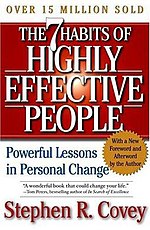
The 7 Habits of Highly Effective People (1989/2004) by Stephen R. Covey

Pages: 340;

This is probably the third or fourth time I have read this book and surprisingly I still feel that I will have to read it again. The book is very rich. Stephen Covey states,
"I would recommend that you not "see" this material as a book, in the sense that it is something to read once and put on a shelf.... [The] material is designed to a companion in the continual process of change and growth."
Of the many books I have read, this is one of the few books that uses a lot of practical examples to illustrate its concepts. In my view, Stephen Covey possesses a teaching style that is comparable to that of one other person who taught similar principles many centuries ago (leave a comment if you can guess who I am alluding to).


The book teaches the following seven principles which Dr. Covey argues to be principles essential for high effectiveness in individuals, families, organizations, communities and nations.
  1. Be Proactive.
  2. Begin with the End in Mind.
  3. Put First Things First.
  4. Think Win/Win.
  5. Seek First to Understand, Then to be Understood.
  6. Synergize.
  7. Sharpen the Saw .
For those of you who may be as busy as I am, you may want to learn about the Quadrant II Tool (the fourth generation time management tool) which teaches the concept of "organizing and executing around priorities." The tool teaches what Covey believes to be the best method of time management: organizing the week. The stages for this time management tool (or rather self-management tool) are as follows:
  1. Develop/tap into your mission statement.
  2. Identify your roles as they relate to your mission statement.
  3. Choose one or two goals to accomplish in each role in the next week.
  4. Schedule time to accomplish the goals you identified above.
  5. Adapt each day to prioritize your goals "while responding to unanticipated events, relationships, and experiences in a meaningful way."

    Feb 16, 2012

    The Sad, Beautiful Fact That We're All Going To Miss Almost Everything (2012) by Linda Holmes

    Pages: 4;

    "The vast majority of the world's books, music, films, television and art, you will never see."

    Yesterday, a friend shared with me a very interesting NPR article. This article convinced me that I should not use my 1-Million-Page Challenge to attempt to read all the great books in the world . I was aware (to a certain extent) of the facts highlighted in this article. However, reading this article helped me to think about these facts very differently. Basically, the author clearly articulates why no one can ever read most of the great books in the world, not even one percent. In fact, even after I read the 2,500 books in 10 years, I would have not read much of the great books in the world. Yes, I would have read much more than the average person but I would have read very little of what the world has to offer.

    After reading this article, I'm convinced that I should not try to read all or even most of the world's great books. It's impossible! It can never be done! However, my goal should be to read as much books as I need to read so that I can equip myself to achieve my life goals. If reading all the world's greatest books is impossible (which it is), then I will at least read as much books as I need to read in order to optimize my life. I think reading at least 2,500 books in my lifetime is probably good enough for that, don't you think?

    Click here to read the NPR article by Linda Holmes.


    Feb 5, 2012

    Global Risks 2012 Report by the World Economic Forum's Risk Response Network


    Pages:  64;

    The World Economic Forum has published the seventh edition of the global risks report entitled the Global Risks 2012. It first features an insightful section that covers the cases which show the potential catastrophic events that could result because of the interconnectedness of the global risks. The three cases are:
    1. Seeds of Dystopia:  This case highlights how societies worldwide could become chaotic as high unemployment rates among young people persist and as governments fail to maintain social provisions.
    2. How Safe are our Safeguards:  Experts are concerned that our regulatory/governance systems will fail to manage today's complex systems including our financial and political systems.
    3. The Dark Side of Connectivity:  Virtual hyperconnectivity creates enormous personal and organizational risks. Think of cyber attacks and the infamous/famous Wikileaks.

    The report features 50 global risks in five categories which experts believe global leaders should be most concerned about. I will list three risks under each category. The first risk under each category is the most frequently chosen.
    1. Economic Risks:  chronic fiscal imbalances, severe income disparity, prolonged infrastructure neglect.
    2. Environmental Risks: greenhouse gas emissions, persistent extreme weather, irremediable pollution.
    3. Geopolitical Risks:  global governance failure, terrorism, critical fragile states.
    4. Societal Risks: unsustainable population growth, food shortage crises, backlash against globalization.
    5. Technological Risks:  critical systems failure, cyber attacks, massive incident of fraud or theft.
    Don't miss the section with the special report on The Great East Japan Earthquake (and tsunami) that killed nearly 20,000 people in March, 2011.

    Click here to read the Global Risks 2012 report: http://www.weforum.org/reports/global-risks-2012-seventh-edition.

    Jan 30, 2012

    Why do a 1 Million Page Challenge?


    So why would someone do such a challenge? What's the motivation behind this challenge? Am I just crazy? Don't worry, I'm not crazy! I've decided to do this because I believe it will enrich my life a lot so that I can achieve my long-term goals. Basically, I have huge goals for my life (those who know me fully understand what I mean... very huge goals) and I'm going to do whatever I can to see them to fruition. This challenge will help me achieve my objectives in the following areas:
    1. I will launch my career with an amazing employer and I look forward to doing great things for both my employer and my employer's clients. This career gives me a wonderful opportunity to make a huge global impact. It is going to be exciting and challenging, I'm sure.
    2. My goal is to be a global citizen who will be a lover of humanity in heart, soul, and action (strength). I want to turn the world upside down... positively. By the time I retire (if I retire) my efforts need to have impacted billions of lives. This sounds impossible so you may have gotten the hint that... I'm on a MISSION IMPOSSIBLE! 
    3. I'm part of a global organization that has a mission to reach every individual on this planet. How do you reach 7,000,000,000 (billion) people and leave a positive impression/impact in their lives? This is another "mission impossible"! I hope that when I finish this challenge, I will have some answers that are actionable for this global organization. (Then again, in ten years we might be talking of 8 or 10 billion people.)
    Anyway, by this time it should be clear that I have some major goals in life and I could use all the ideas I can get. I apologize that the ideas above are vague; it's not necessary to get into the details at this time.